Rare Conditions and Interviewing Practitioners

Anonymous

Kernicterus is a condition that results from severely high bilirubin levels in newborn babies. Completely preventable, kernicterus is devastating for the way that it wreaks havoc on small children.  In essence, excessively high bilirubin levels cross the blood brain barrier causing permanent brain damage. The resulting condition, Kernicterus Spectrum Disorder can leave children physically disabled with cerebral palsy, auditory neuropathy spectrum disorder – and a number of other global developmental issues.

As though the devastation of a newborn baby having brain damage because of a problem with severe jaundice isn’t bad enough, kernicterus is so rare that very few providers really understand it. Why would they?  After all, this is a rare condition that is caused by mismanaged jaundice and levels that cause permanent brain damage happen very rarely.

Because of the intricacies of kernicterus and other rare diseases, it becomes particularly important for the patient or caregiver to really make sure that those who will be directly working with the patient have a good, working knowledge of whatever the illness or condition is. Without doing this, the patient may not get all of the resources they need because the providers they have do not have a solid understanding of the condition or disease. 

In essence, caregivers and/or patients should do their homework and interview practitioners before they start working with them.

Researching the Condition

When dealing with any rare disease or condition, patients and caregivers should do their due diligence to really understand the disease or condition. It becomes particularly important for them to review medical journal articles and what has been published on the subject. Articles found on Google that are general flyers about the disease or condition certainly highlight the main points about the condition, but don’t help to educate the patient or caregiver on the various mechanisms of the disease.

Additionally, caregivers and patients should also be keenly aware of the patient’s medical case.

They should be able to not only answer questions about the disease, but about the individual they are caring for. This means that they should have the patient’s medical chart accessible, and they should also make sure they have read the latest published scholarly medical journal articles on the subject so they are well versed in it. Without doing so, they will simply not know if the interview they conducted with the practitioners told them what they should know.

Interviewing Practitioners

When an individual is a caregiver of a patient who suffers from a rare disease, the caregiver must really do their due diligence to make sure that those who will be caring for the patient really know what they’re dealing with. 

In essence, they need to caregivers and patients should ask questions like:

  • “What is your experience with this disease?” 
  • “What kinds of treatment methods have you recommended with such a disease?”  
  • “What is your understanding of this disease and how it works?”

Caregivers should also explain: “I am aware this is a rare condition, so I need a provider that really understands this.”  Explaining something like this helps the provider to also understand the needs of the caregiver.

In essence,  the caregiver should feel comfortable with the individual and their answers.They should come away from the interview feeling like they have a good understanding of the medical practitioner’s experience with the disease or condition so they can make an informed decision on whether to move forward with that medical provider.

In conclusion, it is important that caregivers and patients carefully interview those that will be caring for patients with rare diseases. Rare diseases are challenging enough – therefore, they need medical providers that have a good working knowledge of the disease or condition.
Kernicterus: Jacob’s Story

Anonymous


I was very cautious throughout my pregnancy because of my anti-E antibody titers. During the second half of my pregnancy, my Maternal Fetal Medicine physician (MFM) was checking weekly ultrasounds due to the potential for fetal anemia. Even though Jacob was born four weeks early and placed on phototherapy lights the day he was born, he was healthy enough to be discharged within 48 hours. When he was discharged, he was discharged without a phototherapy blanket and without follow up lab work despite my concerns.

When I went to my lactation appointment a couple days after my son was discharged, I asked the nurse if she could run a test to check his bilirubin level. She was surprised the doctor had not posted an order, so she ordered it for us.

I was shocked when she called us a couple hours later with directions to head straight to the hospital because a team would be waiting for us. They told me his bilirubin level reached critical levels and needed a life saving procedure.

My heart ached as he was intubated and intravenous lines placed in preparation for the double volume exchange transfusion – a critical treatment for saving his life.

We waited for a painstaking twelve hours. The procedure never happened due to “logistics” in receiving the special blood, so he was given other measures which slowly lowered the bilirubin. The next day, the neurologist told us that his MRI showed brain damage. Anything else the neurologist told us was simply a blur – I couldn’t hear anything else she said. How quickly my life was turned upside down, from the happiest day to the darkest day of my life.

Jacob was sedated and then lethargic for several days. The Neonatal Intensive Care Unit (NICU) doctors told us to “wait and see”. We were sent home again; this time with a heavy heart still in shock and despair wondering what could have gone so wrong. They told us Kernicterus is a spectrum, but what did that really mean? This uncharted path of uncertainty was torturous.

Watching and Waiting for Symptoms

Jacob’s brothers are ages 5 and 3. They love to sing and talk to him. His diagnosis of Auditory Neuropathy Spectrum Disorder (ANSD) with profound hearing loss is devastating as it means that Jacob can no longer hear his brothers.

With ANSD, he did not respond to fire alarms, banging pots and pans, and during audiology testing didn’t respond to the highest decibels.

Jacob’s arms and legs felt tight and stiff, it was hard to change his clothes. We worried endlessly about cerebral palsy – which is another symptom of Kernicterus.

I have spiraled into a depression, riddled with anxiety and guilt. It killed me that I was not able to protect my baby who was born perfectly healthy.

Jacob’s journey is far from over, but if sharing his story helps one innocent baby, then this horrific nightmare has not been suffered in vain.

Kernicterus, Medical Professionals and Judgement

Anonymous

There are some days that are burned into your memory.  You can remember these moments with such clarity. A moment for me was when doctors told me that my son would never walk and would never talk.  And, with that information, I knew he would never catch frogs in a pond, he’d never jump into  a lake in the middle of summer and he simply would not experience childhood the way I had always envisioned.  As soon as someone tells you that your child will not do these things, your world is crushed and you don’t want to believe any piece of it.  

Perhaps more painful than being told that your newborn child would not do many things, is the subsequent judgement that came from healthcare professionals.  Medical professionals who were supposed to help guide me with my son’s condition, instead blamed me for it.  These moments of judgement are also burned into my memory.

The condition my son experienced was severe hyperbilirubinemia – jaundice.  Yes, a lot of children have jaundice when they’re born and for many, their bilirubin level doesn’t reach high levels. But, for my son – and countless others, it reaches levels that threaten their lives. For some, if they survive, they are crippled with a wide variety of symptoms including cerebral palsy and serious hearing issues.  The condition – rarely diagnosed because of the legal ramifications of mismanaged jaundice – is called Kernicterus.  It can mean a lifetime of disability.

Knowing that your child has suffered a major medical emergency within the first few days of his or her life is one thing – but, knowing that it may have affected his or her development is beyond scary. It feels like you’re looking into the black abyss wondering what’s about to come next.  And, while you’re forever concerned about the well-being of your child and looking to medical professionals as a soothsayer or crystal ball reader, their judgement for what happened to your child is perhaps most devastating.

I had to take my son to a pulmonologist for a few weeks after he was born.  Sending him home with a monitor was perhaps, one of the most difficult experiences – especially since they said my son very well could have problems breathing.  It was, essentially, they only way they would release him – with a monitor. On one hand, it gave us peace of mind that it would go off in the middle of the night and we could administer CPR if he had stopped breathing.  For my husband, an Iraq combat veteran, the beeping of the machine sent him into a panic.  I would have to remind him that our son had pulled the leads off and  chances were he was just fine.

The monitor was certainly concerning – but, getting it removed by the pulmonologist came with an incredible amount of judgement. There I was, sitting in a little room with an 8 week old baby, worried because I needed my son to be okay – but, also was nervous that they would not take the monitor off of him. I sat there patiently, when the pulmonologist. Dr. Baker looks at the chart, then looks at my baby, then looks at the chart. “Oh, this was the baby with the bilirubin level of 44.”  

“Yes,” I replied. 

“I saw him when he was in the NICU” said Dr. Baker. 

“Yes,” I said – with no memory of him ever having visited my son or talking to me during our stint at the NICU. 

“How does a baby even get to a level like that?” he said, looking at me. 

“Yes, it was very high.” I said waiting for reassurance.  

The doctor looked my son up and down, then looked me up and down and said, “How did you not even notice the jaundice?  How could you let it go as high as it did?  I’ve never seen a case like this in all of my years as a doctor – like 30 years!”  He waited for me to respond, but I said nothing. He continued “I just don’t know how you could have let it go that high.”  And, with that he got up and left the room.  

He later returned to tell me that I could not remove the monitor because there was something “mysterious” in the readings and he needed more data. I left the office feeling crushed, feeling responsible, and still so concerned about my son’s well-being.

About a month later I returned and his physician assistant, (who I was very glad to see) removed the monitor and said my boy was very healthy.  There simply was no reason for the monitor to remain. There was nothing wrong with his breathing.

In hindsight and with a lot of therapy, I realize now that the doctor’s reaction was simply wrong.  I was not to blame for a rare issue – severe hyperbilirubinemia.  I also realize that the doctor’s reaction was simply not professional.  The point, however, is that medical professionals need to remember that what they say, how they react to serious emergencies like this has a significant emotional effect on the family of the individual.  In essence, we need medical professionals to be supportive and comforting.  Emotional support is often needed from medical professionals – particularly after traumatic events like severe hyperbilirubinemia.

To learn more about Kernicterus and mismanaged jaundice, please visit http://www.pic-k.org (Parents of Infants and Children with Kernicterus) and http://www.kernicterus.org

We Think Your Baby Has Kernicterus

Anonymous

We think your baby has Kernicterus. Those words will never be erased from my mind or memories. The whooshing sound of the breast pump as I sat there with just the tiniest sliver of the curtain open so the doctor could see me as I pumped.  I was pumping for my baby I had given birth to just a little over a week ago and here I am in the hospital in a Neonatal Intensive Care Unit (NICU). I am not sure what I did: I can’t remember if I kept pumping, if I turned it off or if I just sat there. My baby has Kernicterus: does that mean my baby has brain damage? How is that possible?! I did everything right. How is this real?! 

Sometimes, less often as the years have gone by, I go back to that day, to that memory. I remember the doctor who I had seen every morning since we had been in the NICU with our baby as he did rounds and updated the students on the current state of my baby. He would say “hyperbilirubinemia” and “Glucose 6 Phosphate Dehydrogenase Deficiency” as students took notes in their laptops. The look he had when he walked in on this particular day I will never forget. I was pumping, and as lots of new mothers learn quickly, pumping is not necessarily a private time. So, the doctor came in and said “Oh, I see you’re busy. I’ll come back.” But I didn’t care. I remember telling him, “Oh it’s fine, I’ll close the curtain.” Then the look came…The one that said he didn’t want to be here and didn’t want to say what he was about to say. He started to speak, “The MRI shows that your child has Kernicterus which we have discussed earlier was something we have suspected.”  I said, “This means he has brain damage, doesn’t it?” The doctor said, “Yes. I am sorry.”  He explained he would have a meeting with the team of doctors to explain it further. After that I don’t remember much. I don’t remember talking to my mother or mother-in-law, I don’t remember what my husband and I said to each other. All I remember is my mother leaving the room crying and me hugging my husband. Call it survival mode, call is PTSD, call it whatever you will. This was now my reality.

At some point my mother reminded me I had a follow up appointment to get myself checked out for my c-section. I didn’t want to go; I didn’t want to leave my husband or my baby. How could I leave now? My husband and mother insisted I go and how important it is to take care of my body as I had just gone through a major surgery. I remember the car ride, I remember passing a local school for kids with special needs – they were getting onto the buses to go back to their parents. My mom was driving and we both looked at each other. Without saying a word, we both knew what the other was thinking. Was this my baby’s future? Will he have a future? What does this mean for his life?

I remember getting to the doctor’s office and the nurse who had weighed me and checked my vitals all throughout my pregnancy was by the receptionist and asked me, “So where’s the baby?!” I replied, “He is in the NICU.” Her face said it all. I don’t remember what she said after that. I remember seeing my midwife who had been on this whole journey with me, and I had to explain what had happened. We were all crying and there really wasn’t much more to say than that.

So, why am I dredging up all of these painful memories that my mind has on some level blocked out parts? It’s simple: this is real, and it happens to families every day. 

Kernicterus is a very rare type of brain damage that occurs in a newborn with severe jaundice. This is due to high levels of bilirubin and spreads into the brain tissues. It is permanent brain damage. 

The reason why I am sharing one of the most painful times of my life is to help you understand this is happening to newborn babies across the world and it is 100 percent preventable. My son also has Glucose 6 Phosphate Dehydrogenase Deficiency (G6PD) and had his bilirubin level tested and had the doctor responsible for my son’s care taken my concerns seriously, the outcome would have been very different for my son and our family.

 It has taken me years for me to stop asking “why us?” and start saying, “we were picked for a reason.” We were picked for the reason that no one will love, care for and fight for my son like we will. He was placed in this world for a purpose. His purpose is not one reason but many. He was meant to change my course in life. He was meant to show others that barriers are meant to be broken. He was meant to teach his little brother how to be compassionate, inclusive, and accepting. The list can go on for days. 

I’m not alone in this journey and I meet new mothers everyday who have felt what I felt. They leave the NICU hospital with their babies who just days before were completely healthy. These women are scared, exhausted, angry and confused.  These women have given me strength and have helped me on a level no one will ever understand unless you have lived it. 

Together, we want to spread awareness by sharing our stories. Of course, we want to put an end to kernicterus to keep it from happening to newborn babies.

Kernicterus

Every year, we hear about newborn babies that have suffered from mismanaged jaundice and are reeling from the effects of severe hyperbilirubinemia.  The stories of these families remain the same – they were ill advised about neonatal jaundice, medical professionals did not take their child’s jaundice seriously and their children are suffering the effects.  Mismanaged jaundice can lead to serious hearing and speech related issues and cerebral palsy.

The Pic-K (Parents of Infants and Children with Kernicterus) nonprofit organization is dedicated to educating the general public about the effects of severe hyperbilirubinemia and preventing kernicterus.  The non-profit organization is also dedicated to supporting families through the devastating consequences of severe hyperbilirubinemia

Together we hope to change this for the better through empowering families with knowledge, support and continued research into understanding the myriad complexities of hyperbilirubinemia.  We are dedicated to educating the general public throughout the United States and the greater global arena about the serious effects of severe jaundice (hyperbilirubinemia), and how preventable it is. 

In the Shadows

rescue

They are in the shadows.

Babes are at risk.  (Jaundice can become toxic when not managed properly.)  Children live with no viable treatment options.  Research funds are needed.  Adults live in immense difficulty.  Families struggle to hold together fractured pieces of their lives.

…all because of jaundice.

There are those shaped by “the K word” and those who are threatened by it.

They live in the shadows.  Many babes are affected by jaundice, but not all escape it unscathed.  Here in the US, there is no reporting system for kernicterus.  Due to the negligent nature of the diagnosis and the ethical concerns that accompany it, it is not always diagnosed either.  How many are living with kernicterus and do not know it?  The effects of kernicterus take months and years to become apparent.  (Newborns don’t need wheelchairs.  They aren’t expected to walk or talk.  The movement disorders, sleep disorders, hearing loss, vision loss etc all become apparent as children miss milestones.  Without proper analysis, the k word is easily swept under the rug, misunderstood, mislabeled.

And what of those living with the milder effects?  Neurological hearing loss (that can only be discovered under sedation with a test that measures brain wave response to sound.)  How often is this misread as behavioral – smart children with unpredictable hearing and difficulty communicating?  Milder forms of kernicterus also seems to come with hyperactivity – how often is that mistaken for other disorders?

The truth is that the numbers of kernicterus are hidden in the shadows.

Our kids, those in picK are likely the tip of the iceberg, and our numbers grow weekly.  And the truth is – one case of kernicterus is one case too many.  The effects are just too catastrophic!

How do we rescue?  How do we make the change?  How do we illuminate?

How do we?

  1. On the front end, we turn the light on!  We spread the word – jaundice can do that, and it doesn’t have to!  TEST!  Prevention.
  2. For those living with the K word, we support the research that will lessen the load of that K.  Research for viable diagnostic tools and treatment options that can lessen the effects of the K…diminishing it’s effects.  Rescue.

Please partner with us in shining the light needed into these shadows to rescue those living with the K!

Justin’s Decision: Deep Brain Stimulation

DBS

Written by Justin

(A Creative Writing English Assignment) 

            Justin talks to his mom about having deep brain stimulation (DBS) surgery, kind of like a pacemaker that can send electric charges in the brain.  15-year old Justin has kernicterus, which is brain damage caused by severe newborn jaundice.  He has athetoid cerebral palsy, which means his muscles move uncontrollably.  He uses a power wheelchair to move around.  His mom understands his voice, but others sometimes don’t, so he also uses a communication device.

Justin: Mom, I have something to tell you.  [waits for mom to stop doing the dishes and come and sit down by him at the kitchen table.]

Justin: I have been thinking about doing DBS.  I know that at first after we met with the doctors, I didn’t want to do it.

Mom:  Right.  You said that you were fine just as you are.

Justin: Now, I want to do it.

Mom: What made you change your mind? [concerned]

Justin: I’m feeling frustrated when my muscles are acting as if they have their own brains. Everything is just too hard. I tried all the medications and none of them have worked for me.

Mom: I know it’s hard.  You said last week that you’re fine with how you are.  So, what are you fine with about how you are?

Justin:  I’m happy.  I have fun watching sports and love school.

Mom: Do you think DBS will make those things harder or easier?

Justin: I think it’ll make things easier.

Mom: Do you remember what the doctors said about what’s all involved with DBS?

Justin: Lots and lots of therapy

Mom: That’s one. Can you name another one?

Justin: There are risks like any other surgery. Benefits are unknown but might calm my movement and make it easier.

Mom: I want you to have an easier life so the possibility of getting better control over your muscles seems pretty cool. Do you remember what the doctors said about how they do DBS?

Justin: I know there are two surgeries. The first lasts six to eight hours.  I’d be in the hospital for one or two nights and it would be where they put the electrodes in my brain by the basal ganglia.

Mom:  That’s right.  And you’d probably be home from school for around a week to recover.

Justin: A couple of weeks later, I’d have the second surgery.  It takes less time and is when they put the stimulator in my chest and hook it to the wires in my brain.  I’d be in the hospital for a night or two and then home for a week.

Mom: Then, do you remember what happens after that?

Justin: I’d go in to get it turned on and then have to go every month for about a year to figure out the right amount of stimulation.  That’s when I’d be doing lots and lots of therapy.

Mom: So, you know what happens.  You know the risks and that the benefits are kind of unknown.  You also know a girl with kernicterus who has had DBS and your movement disorder team did DBS with a young man with kernicterus this past year.  One thing they mentioned was that if you did DBS now, it would probably be more effective than if you waited until you were older.  Did you remember that?

Justin: Yeah.  DBS hasn’t been done on many kids with kernicterus.

Mom: Only a handful.  And it’s not a cure.  You met Lexi and she’s better than she was without DBS, but she still has a lot of challenges.

Justin: Lexi is pretty young, so maybe she’ll keep on doing better as she gets older.

Mom: It’d be nice to be able to see in the future and be able to compare your life with or without DBS.  Unfortunately, we don’t get to do that, though.  We just have to make a choice based on the best information we have and live with it. It’s not an easy yes or no answer and it’s all kind of scary.

Justin: Like a baseball game scary

Mom: Explain?

Justin: Tie game, last inning, 2 outs, one man on third, 3 balls, 2 strikes.  DBS can be like my RBI.  It’s life baseball.  It’s my hope for winning the game and knocking kernicterus on its butt!

Mom: So, you’re going to do it?

Justin: Yeah. Let’s do it and see if we can get a homerun but be happy with a base hit.

This is a pictorial view of Lexi’s journey with DBS

Beyond the Numbers: What untreated jaundice means for my family

Beyond the Numbers: What untreated jaundice means for my family

November 11, 2013 by Kasey Haas, Guest Blogger

Shortly past dawn my little sister, Lexi, awakens. She coos like a baby dove, calling my mom to her. Mom nestles her in a blanket and snuggles her on the couch, urging tiny bits of food and water into her mouth.

Lexi (center) and Kasey (the author, right)

Lexi (center) and Kasey (the author, right)

The scene is reminiscent of moments from around the world as parents care for their tiny, helpless newborns. Only my sister is not an infant. My parents have been repeating this scene each morning of Lexi’s eleven years and unless something dramatic happens on the medical front, I imagine that when my mom is 80 and my sister over 40, their mornings will still be shared in this manner, because Lexi has kernicterus (KI), a lifelong neurologic injury caused by her newborn jaundice.

KI causes severe motor impairments and a form of deafness called auditory neuropathy, but it spares the intellect, trapping children in bodies that don’t work but with minds that function perfectly. As the morning progresses at our house, Lexi will multiply fractions, conjugate verbs in French, and learn about European history—but all at home as our local schools can’t accommodate a child with such advanced intellect and poor physical function.

Lexi’s story is relatively rare, but not unique. Shortly after her birth, my parents noticed a yellowish hue to her skin. Our doctor assured us that there was nothing to worry about. “Feed her often and she will be fine.” And with that we were sent home with the newest member of our family. No tests. No further instructions.

Read more here…

Let’s Make Kernicterus a Never Event

headerlexi-yawning-300x225

September 18, 2013 by Kasey Haas, Guest Blogger

In 2001, the National Quality Forum labeled kernicterus (KI)– a disability caused by untreated newborn jaundice and characterized by motor and hearing impairments – a “Never Event”. Alongside events such as leaving sponges and tools inside surgery patients, KI was classified as an event that is so easy to avert, that it should absolutelynever occur. Yet, even in the United States, we have failed to eradicate KI.

Why does it persist?  …Read more here

http://blog.d-rev.org/2013/09/18/lets-make-kernicterus-a-never-event/

DC. We came. We saw. We Conquered?

Posted on May 21, 2013 by 

IMG_0423

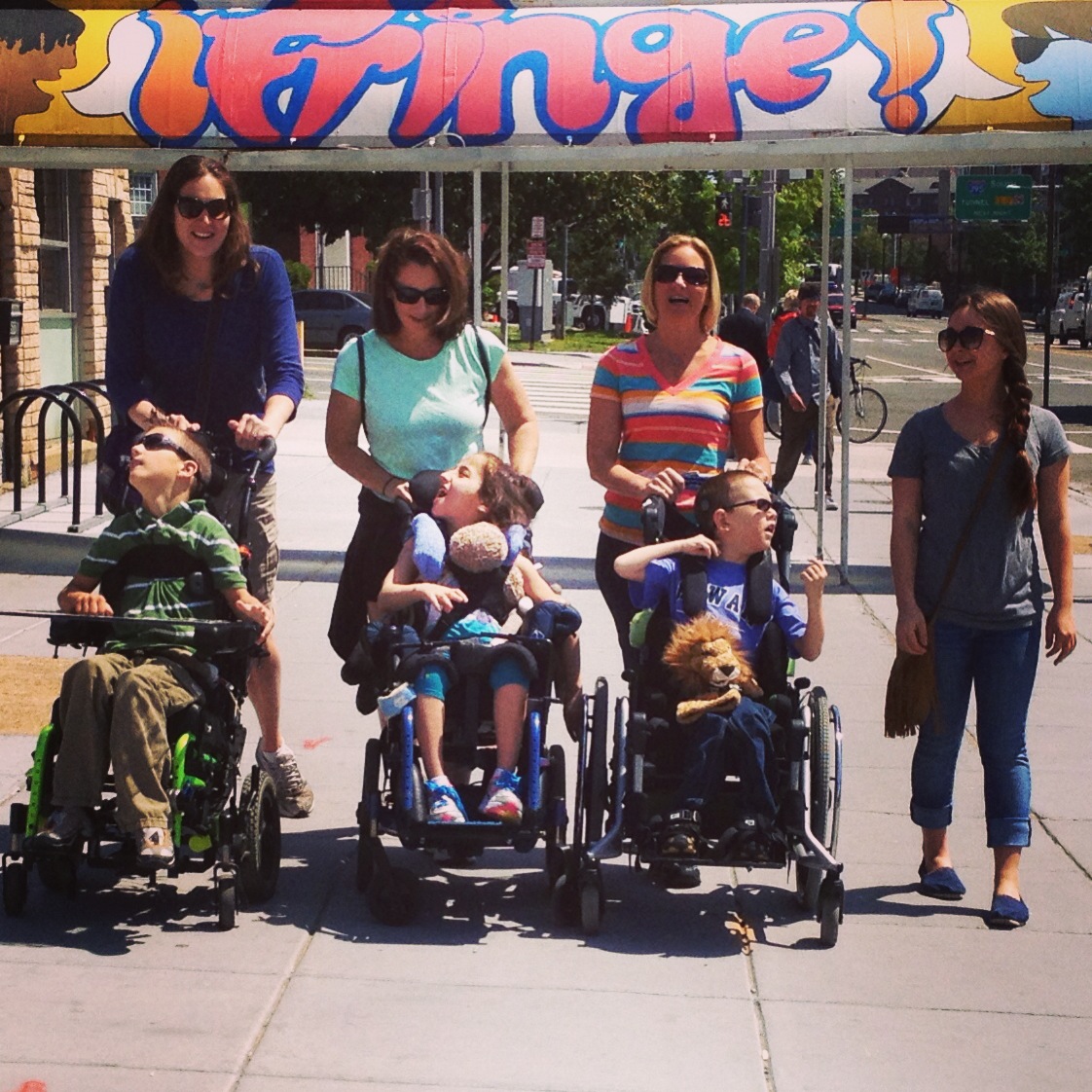
May 2nd 5 moms, 3 of which brought their kids with KI, (equipped with the wheelchairs that KI brought into their lives…and more than a few other pieces of medical equipment) to DC.

We were invited quests at the pediatric Academic Society’s annual meeting, particularly the bilirubin club, the global prevent kernicterus network, and the kernicterus symposium.

For those of you that aren’t familiar with us, PICK is a small grass-roots non-profit that has reorganized and reemerged from several dormant years.  We have 2 missions that fuel one another:

Prevent

 Cure

 In a nutshell, it’s this:

  1. Jaundice can be harmful to newborns
  2. Proactive care, testing, evaluation, screening, and treatment are NEEDED
  3. These steps can PREVENT KI for happening
  4. We advocate education and compliance to standards that will stop KI before it starts.
  5. For those who already live with the devastating consequences, be they severe (appearing much like spastic quadriplegia, coupled with hearing loss, inability to eat, digest food properly, speak, and sleep) or milder (appearing more like behavioral issues, hyperactivity and frustration) there is a great need for research leading to EFFECTIVE treatments…treatments that will pave the way toward a cure.

So, back to DC, our mission there, although barely articulated behind the flurry of arrangements for childcare, spouses, nursing care, lodging, fundraising (we each paid our way almost entirely…but don’t feel too sorry for us, WE BELIEVE in this and are willing to invest in it).  So our mission:

  1. Let the medical community, particularly those who are invested in bilirubin research, phototherapy, testing, neonatology, neurology and pediatrics, remember what they are about
  2. Get the word out that our membership CONTINUES to grow (this is NOT a good thing, and yet it can be used for good in that it can help us pursue better treatments and get the word out)
  3. Network with others invested in seeing KI stopped.
  4. Get the word out to connect other KI families across the globe (for more effective research and treatment)
  5. Let our kids work on something bigger than themselves…making lemonade of the lemons in their life…not suffering silently, but using their collective voice to impact change

At times, between diaper changes, tube feedings, charging medical devices, concerns about brewing troubles in their complex bodies, taking time to let the kids stretch outside of their wheelchairs etc…it felt like we just didn’t have enough to give.  Indeed our actions had to be arranged around our kids needs.  They were the stars of the show,after-all, and their needs had to be met.

luggage for 1 kid with ki and his mom

this was all of the equipment that we brought for my son

And they were AMAZING.  What highly intelligent kids sitting in bodies that would not cooperate at 7,9, and 11 years old would sit through hours of lecture on high level science behind phototherapy?  These kids!

At one point I had to wipe my boys tears from his eyes as he saw a slide of a severely jaundiced and critical baby.  He can barely utter a word, and yet, he spoke volumes, and the whole room saw it.  He knows what happened to him, and he carries a tremendous amount of compassion for other children at risk.  He’s on the team!

There was more than 1 teary eyed physician that offered thanks for our organization and for our kids and the inspiration they offered.  They shined.  Their intelligence and humor shined.  They made us laugh constantly, and many docs offered thanks to us forreminding them what they are about in the fight to stop  KI.

Our hearts broke to hear more about the extent of the global burden of jaundice, and the cataclysmic damage left in it’s wake.   But we didn’t just talk about the problem, we heard from the field, what people are DOING about it…products being developed to make testing in the field affordable and portable with minimal battery power, safer means of heliotherapy for babes that don’t require the NICU, and phototherapy options for between $200-600 that last 8 years and are built to withstand power surges and shortages.  WE WERE INSPIRED.  There is a problem, and there are people out there with their hearts and minds invested in the battle to see it stopped to stopKI!!!

We won’t lie.  Speaking about KI for 16 hours a day for 5 days, while caring for our kids – NOT EASY.  We each fought back tears of our own at different times.  Living in the reality and discussing a tragedy beyond human comprehension – it takes it’s toll.

Doing something –

Acting –

Being the one that cries out, that exposes the need for action –

Seeing the powerful voice that our children have…the voice that is so much stonger than words uttered –

…it’s medicine for the soul!

Networking.

  1. We made dozens of contacts and are in the process of developing an educational program for professionals, that will be viewed at several university hospitals.
  2. Some of our growing group in Brazil will be able to meet this week with a non-profit that is working to give Brazil access to more affordable and effective phototherapy.
  3. Our kids got to meet many heros that have fought to prevent their condition.  They inspired one another, and the docs that work hard to stop KI.
  4. We received over $7,000 in donations as a direct result of our work there.  (These expenses will be used to support research and reimburse some of the board’s travel expenses.)
  5. We were able to distribute over 500 of our brochures.
  6. Numerous board meetings and brainstorming took place (something that is often a challenge given our spread over 3 time zones and busy schedules.)

And then there are the things that don’t fall into bullet points as easily:

For the first time that I know of, in over 8 years, 3 kids with KI got a chance to spend five days together.  It gave us a unique time to reflect, as mothers, on the similarities and differences our children share.  This information might prove very useful in steering research.   And speaking of research – the leading researchers of KI and hyperbilirubinemia were THERE and they were taking it all in too! In fact, the fabulous neurologist and world-renown researcher Dr. Steven Shapiro spent a large amount of time with our kids.  There was some fabulous conversation about science, some great connections on research to benefit our kids, and educationalventures to help encourage better handling of newborn jaundice, and some fun too!

We very much look forward to the day when our organization will grow to a size that can accommodate a FAMILY CONFERENCE.  Bringing the researchers and families TOGETHER – there will be more benefits there than I can articulate.

And humor!!!  Lexi, not only has an IQ of 160, but she also has a wicked sense of humor.  Lexi does not have the hearing loss that the boys have, and is able to speak several words rather reliably.   The boys understood every bit of what Lexi was getting at.  The ability to speak does not negate the ability to understand.  We were able to ask questions and give options and get huge smiles and laughter in response…and the laughter of Lexi and Blue and Zach is a tangible piece of pure joy!!!

So, between laughter and tears and long days, and new connections, YES, we conquered!